

The last backpack has been put into the car. Accompanied by my Guatemalan girlfriend and her family, we are ready to start our road trip from Guatemala City to Honduras.
Our very first stop along the way is none other than Pollo Campero.
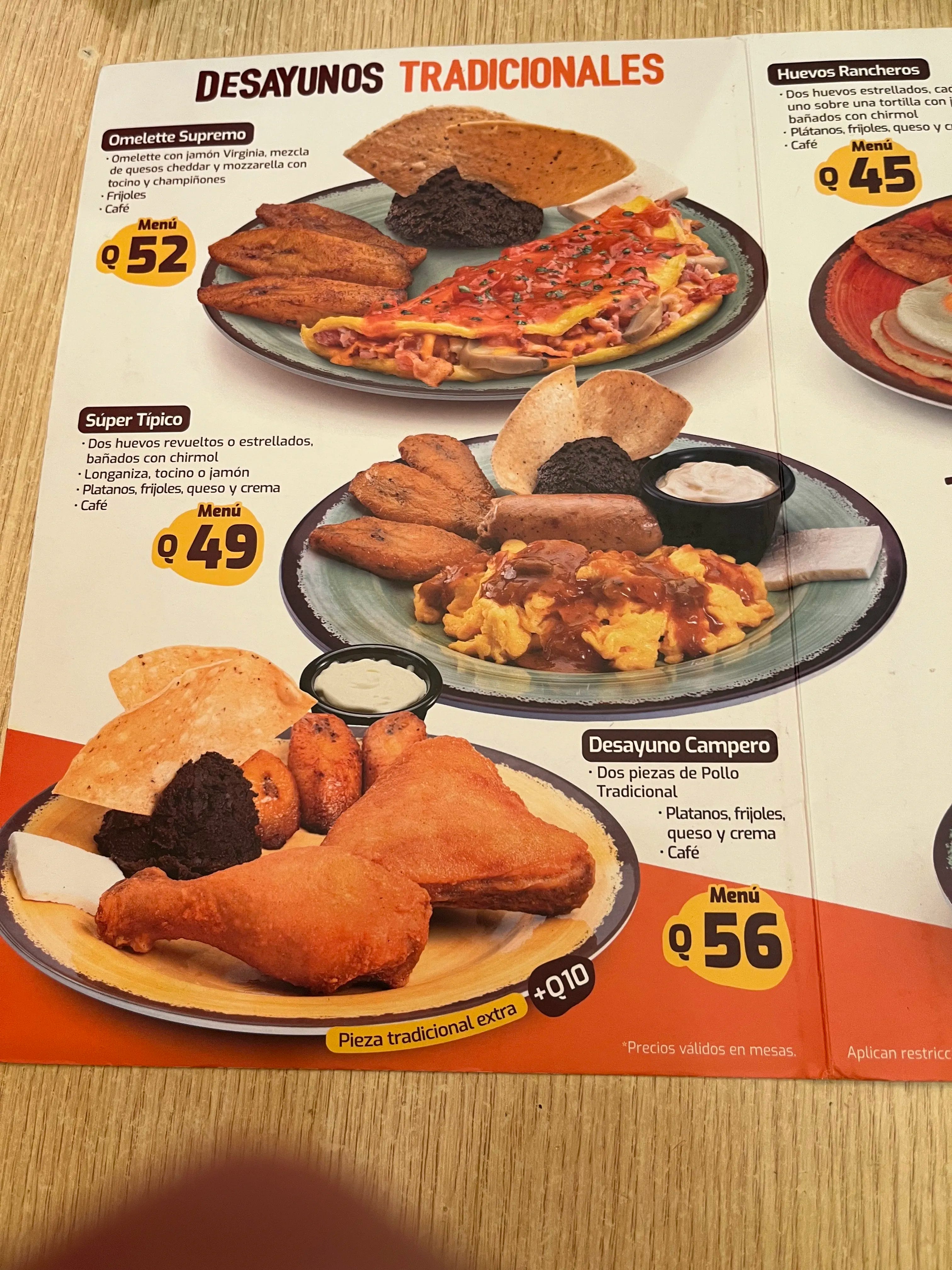
It’s early, so we received the morning menu. To my surprise, it somehow resembles what I would expect from a traditional Guatemalan breakfast. One of the options includes tortillas, black bean paste, cheese and plantains, which you can imagine as a banana’s brother that must be fried before consumption. On top of traditional breakfast, you get fried chicken.
I ordered a combo meal for Q56 (about 7.30$). It is worth noting that prices at Pollo Campero are not considered low-end by locals.
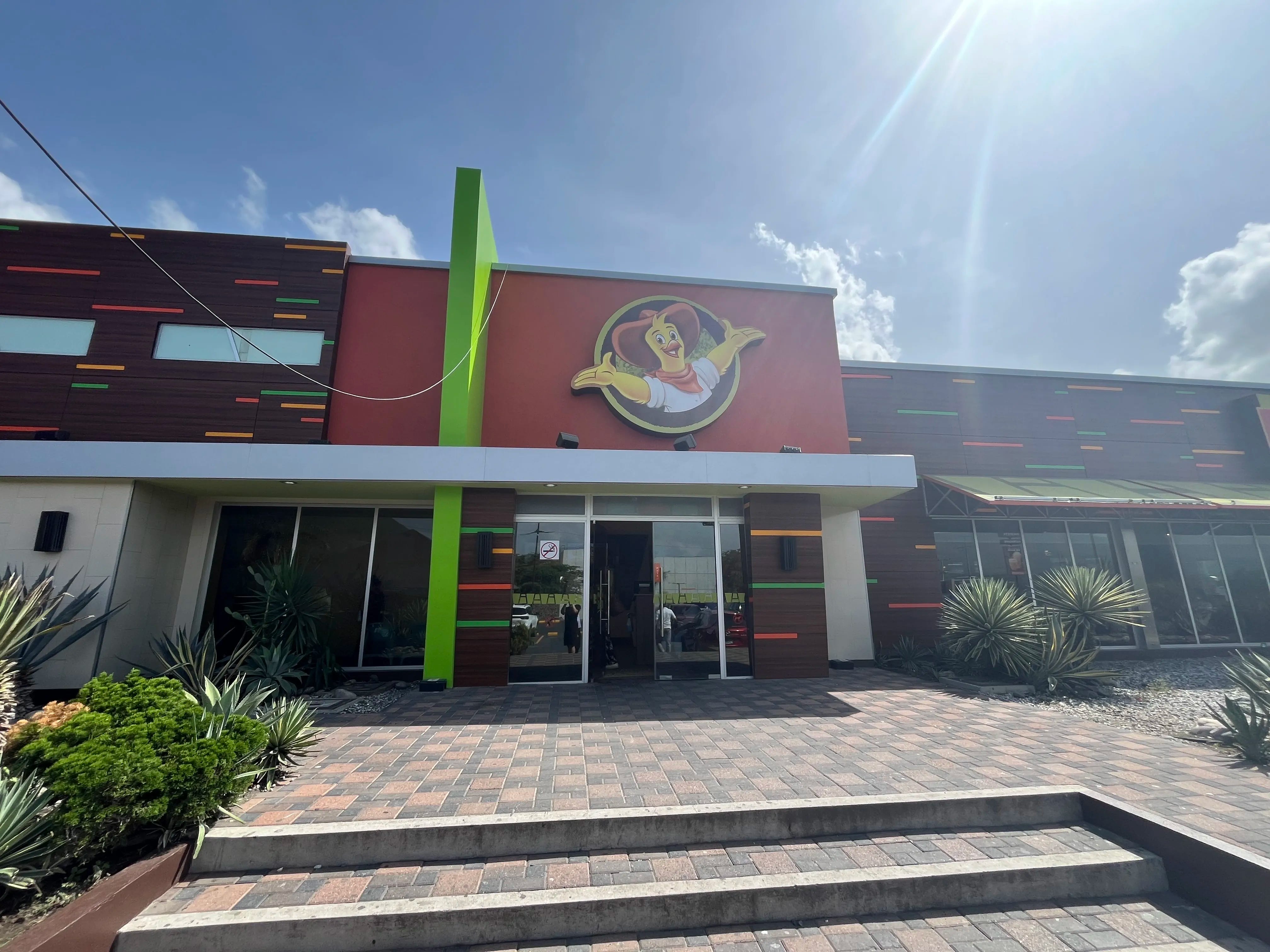
The restaurant is packed. I was told it’s almost always like that, which explains the need for the waiting lobby we went through.
At the same time my light-colored eyes and hair act like a lighthouse. I spot many people staring at me trying to figure out where I’m from. Guatemalan slang has a term for a person who looks like me, I’m known to everyone as “canchito”, which literally means “blonde”.
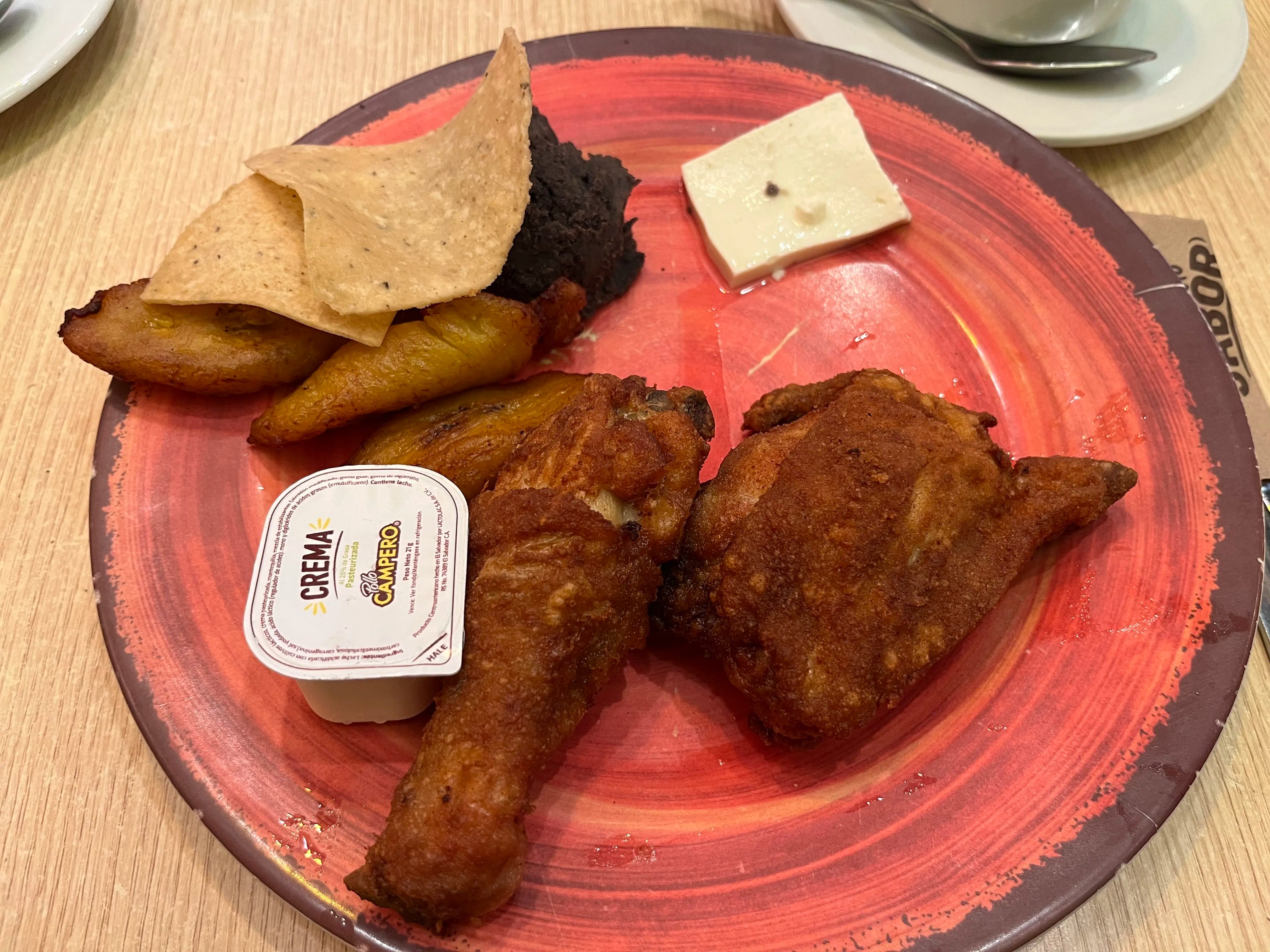
Their fried chicken was simply delicious. I have never tried better fried chicken at any other fast food chain. Unlike KFC that I know from the Czech Republic, Pollo Campero is not overseasoned thus more true to the natural taste of the chicken.
As I enjoyed my meal, I talked with my girlfriend and her family about what is behind the success of this place. It was hard for me to understand how something such as a fast food chain could be a part of national pride.
After digging into the history, I no longer wonder why.
Where it all began
The first Pollo Campero was opened in 1971. It was their successful advertisement praising their Guatemalan roots that made customers associate them with national pride. This also gave them an advantage over the gradually growing competition in the form of US-based chains such as McDonald’s or Pizza Hut.
Just a year later, they expanded into neighboring country El Salvador.
Surprisingly, it was not only the slogan “Tan guatemalteco como tú” (As Guatemalan as you are) which was successful, but also “Tan salvadoreño como tú” (As Salvadorian as you are). A small hint behind success of slogan targeting El Salvador is that, unlike Pollo Campero, the market entry of US chains was delayed until the mid-1980s due to the ongoing war.
Pollo Campero advertisement from the 1970s, featuring the famous slogan “Tan guatemalteco como tú” in the end.
Nostalgia economy
A national pride oriented advertisement isn’t the only factor that supports the cult of Pollo Campero today. To undertand what this other factor is, we need to focus on the people who left their motherland in order to work abroad.
And it’s a lot of people.
Mainly coming to the US, the money these people are sending back to their families make up to 19% of the country’s entire GDP.
The nostalgia economy refers to the phenomenon where customers crave products associated with their home. And it’s Pollo Campero that became the flagship of this nostalgia. My girlfriend’s family mentioned how many people take Pollo Campero into the plane with them. They even suggested that I should do the same and bring some fried chicken home so my parents can try it in Europe.
Taking Pollo Campero into the plane is a big deal. Just take a look at this poster by Delta Air Lines, which lists “1 bag of Pollo Campero” as an example of carry-on baggage.
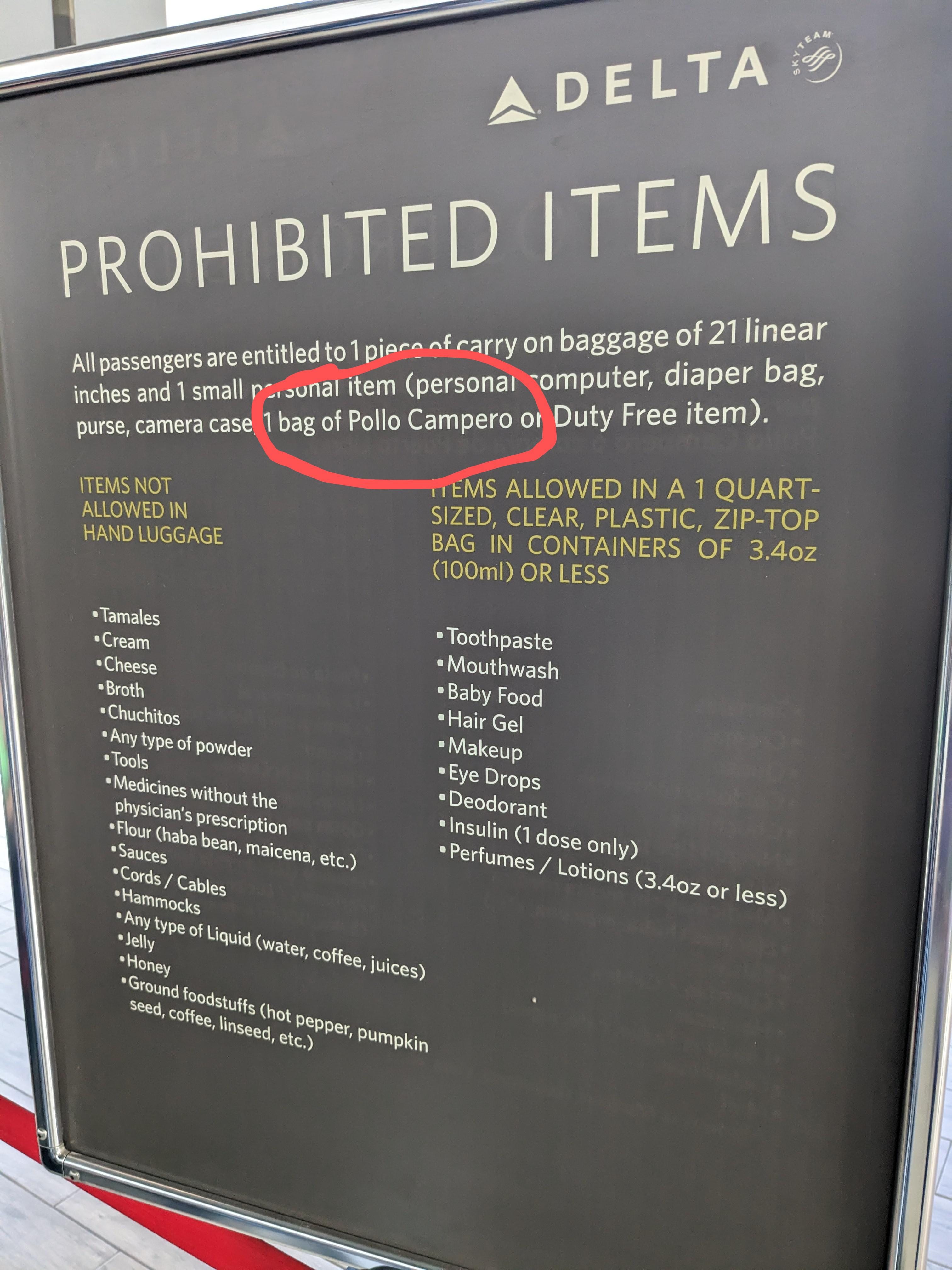
Simple as that, people who occasionally come to visit their family in Guatemala want to take part of their home back to the US, and it so happens that this often means a bag of fried chicken from Pollo Campero.
We are not flying today, just driving. So, when we finished our meals, we got back into the car to continue our road trip. Since then, I have known the answer whenever someone asks me what my favourite fast food chain is. It’s not only my favourite one, but also the most fascinating one.
Resources and further reading
My main resources beside my own experience and talking with locals.
First is the book that contains case study of Pollo Campero, second is an article discussing phenomenon of taking fried chicken into a plane. Last one is source of GDP statistics.
Ramadani, Veland, Erick P. C. Chang, Ramo Palalić, and Esra Memili. Entrepreneurial Family Businesses: A Textbook on Innovation, Governance, and Succession, with Case Studies. 2nd ed. 2024. Springer Texts in Business and Economics. Springer International Publishing, 2024. https://doi.org/10.1007/978-3-031-59261-4.
Mejia, Brittny. “Why Flights from Central America Often Have the Enticing Aroma of Fried Chicken.” Los Angeles Times, April 14, 2021. https://www.latimes.com/california/story/2021-04-14/pollo-campero-central-america-los-angeles.
Sweigart, Emilie. “Guatemala by the Numbers.” Americas Quarterly, April 22, 2025. https://americasquarterly.org/article/guatemala-by-the-numbers/.